
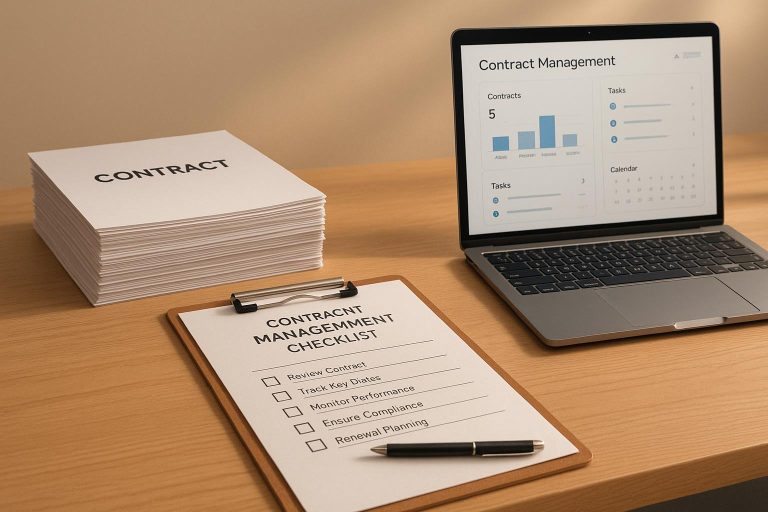
Managing contracts can be a headache for small businesses, but a clear system can help you stay organized, avoid costly mistakes, and save time. Here’s a quick guide to streamline your contract management process:
- Centralize Contracts: Store all agreements in one secure, digital location to reduce risks and improve access.
- Define Roles: Assign responsibilities for negotiation, approvals, and tracking performance.
- Use Templates: Standardize contracts with pre-approved templates to save time and minimize errors.
- Review Thoroughly: Check scope, pricing, legal terms, and renewal clauses before signing.
- Track Key Dates: Set alerts for renewals, payments, and deadlines to avoid missed opportunities.
- Monitor Vendors: Regularly review vendor performance and spending to ensure value.
- Cut Costs: Audit contracts, cancel unused services, and negotiate better terms.
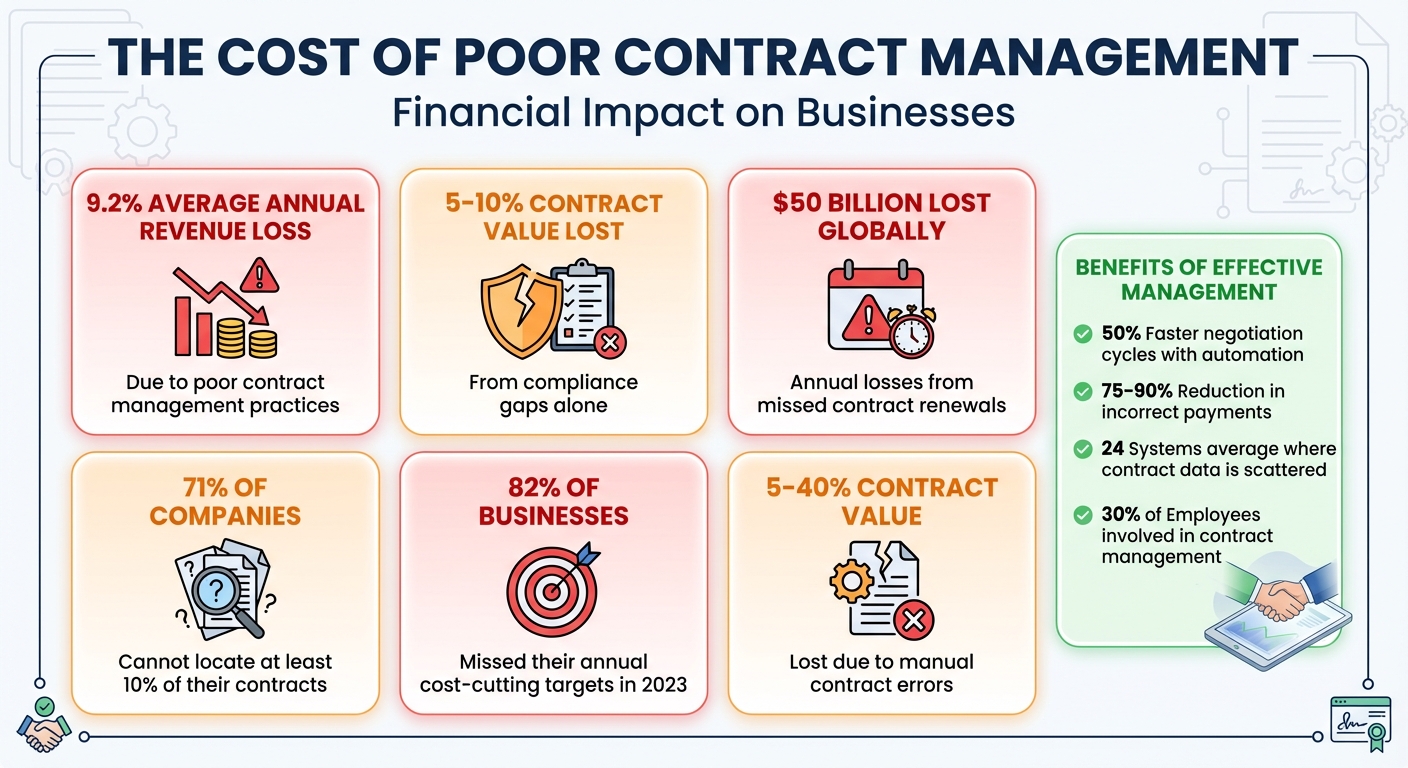
Contract Management Statistics: Costs of Poor Practices for Small Businesses
What is Contract Management | Introduction to Contract Management Explained Under 2 Minutes!
Building Your Contract Management Foundation
To manage contracts effectively, you first need a solid foundation. This means organizing your contracts, defining roles and responsibilities, and standardizing how you track important details. Without these basics, even the best efforts can result in confusion and missed opportunities. A strong foundation sets the stage for smooth contract review and management processes.
Research highlights the stakes: organizations lose 5–10% of contract value due to compliance gaps, while poor contract management results in an average revenue loss of 9.2% annually. For small businesses, these losses can be especially damaging. The upside? A clear plan, consistently executed, can make all the difference.
Set Up a Central Contract Storage System
The first step is consolidating all active contracts into a single, secure digital location. This includes everything – vendor agreements, service contracts, leases, and any amendments or addenda. Scattered storage makes it harder to track critical dates and details, leading to avoidable risks.
A cloud-based solution is a great starting point. For smaller operations, a simple cloud storage folder might do the job. As your contract volume grows, consider specialized tools like bizSupply. These platforms offer features like automated alerts and data extraction from PDFs, making contract management more efficient.
Security and searchability are non-negotiable. Use access controls to protect sensitive information and adopt clear naming conventions to make files easy to find. Collect essential metadata – such as start and end dates, total value, renewal dates, and key contacts – and back up your data regularly to prevent loss and ensure continuity.
Assign Roles and Set Approval Rules
Once your contracts are centralized, the next step is defining roles and establishing clear approval rules. Contracts require active oversight, so it’s important to specify who handles negotiation, who has approval authority, and who monitors performance. Even in small teams where individuals juggle multiple roles, responsibilities should be clearly outlined. Approval thresholds based on contract value can further streamline the process.
A structured approval framework not only improves compliance but also reduces risks and boosts transparency. Document these roles and approval criteria in a policy that’s easily accessible to your team.
Create Standard Contract Templates and Data Fields
Standardizing your contracts saves time and minimizes errors. Develop templates for commonly used agreements – such as vendor contracts, NDAs, and employment agreements – and ensure they include all necessary terms. Pre-approved templates ensure proper legal language is used, eliminating the need to start from scratch every time.
For unique contracts, consider adding custom fields. For example, you might track square footage for leases or delivery schedules for manufacturing agreements. These tailored fields provide clarity and ensure nothing important slips through the cracks.
Using consistent templates and data fields not only reduces mistakes but also speeds up compliance checks and contract analysis. They also make it easier for operational teams to understand their obligations. If a team member leaves, well-documented contracts ensure that critical context is preserved.
Many organizations find they need to address foundational issues before adopting contract management software. Experts caution that automating processes without first establishing a solid foundation often leads to inefficiencies.
Before You Sign: Contract Review Checklist
Signing a contract without a thorough review can lead to costly mistakes or obligations you didn’t anticipate. This checklist is designed to help you catch potential issues early, ensuring the agreement aligns with your business goals and requirements. Taking the time to review carefully is a key step in protecting your operational and financial interests.
Confirm Business Needs and Contract Scope
Start by clarifying why the contract is necessary. What problem does it address? What specific outcomes or deliverables do you expect? Gather any previous contracts or related documents by using a standardized request form to collect crucial details like names, dates, payment terms, insurance requirements, and contact information.
Clearly define the deliverables, including tasks, quality benchmarks, and deadlines. Break the project into distinct milestones to avoid scope creep and reduce the likelihood of disputes later. Identify your non-negotiables – those critical terms or conditions that are essential to your business.
Evaluate potential risks by considering both their likelihood and potential impact. Make sure risks are minimized and equitably distributed between parties. Set clear thresholds for what is acceptable, ensuring your review process aligns with an established framework for consistent evaluations.
Check Pricing and Legal Terms
Once you’ve established the contract’s purpose, focus on its financial and legal details. Review all pricing terms carefully. Confirm payment schedules, due dates, and invoicing requirements to safeguard your cash flow. If the contract includes an Annual Volume Commitment (AVC) or Minimum Annual Revenue Commitment (MARC), understand which services contribute to these commitments and track your progress to avoid penalties.
Pay close attention to renewal and termination clauses. Note the contract’s expiration date and check for automatic renewal (evergreen) provisions that could extend the agreement without your consent. Understand the steps required to opt out of renewal, and review any early termination penalties to avoid surprises if you decide to discontinue services.
"If a service is not covered by a contract, it is likely you are paying a lot more than you need to."
– Jane Laino, President of Digby 4 Group, Inc.
Ensure the contract complies with all relevant legal and regulatory requirements, including licensing, certifications, data protection, security standards, and safety guidelines. Carefully review clauses related to dispute resolution, indemnification, and liability limits, and make sure you understand the process for handling amendments or changes to the agreement.
Complete Final Review and Get Approval
The review process should involve collaboration. Bring together your legal, procurement, finance, and operations teams to confirm all aspects of the contract. Your legal or compliance department should verify that the agreement meets all legal standards and aligns with your company’s internal policies.
Double-check all documents and attachments for accuracy and consistency. Submit the contract through your approval workflow, ensuring it meets the necessary value and risk criteria. Automating parts of the review process can save time and reduce errors. Once everything has been verified, you’re ready to sign. This final step underscores your commitment to both compliance and efficiency.
sbb-itb-291cea0
After Signing: Managing Active Contracts
Once a contract is signed, the real work begins. Actively managing contracts involves keeping track of terms, ensuring vendor performance, and meeting deadlines. Without a proper system in place, contracts can easily become neglected, leading to missed deadlines, wasted money, and compliance issues. A structured approach builds upon your initial contract foundation and review process, making life-cycle management smoother.
Store Signed Contracts and Keep Records Updated
As soon as a contract is signed, upload the countersigned version to a centralized storage system. Using a cloud-based platform ensures your data is secure and accessible from anywhere. Make sure the system supports common file formats like Word, PDF, and Excel to avoid compatibility issues.
Key contract details – such as start and end dates, contract value, renewal deadlines, termination notice periods, and primary contacts – should be recorded. This metadata makes searching and reporting much easier. Consider this: businesses globally lose an estimated $50 billion annually due to missed contract renewals, often because critical details weren’t properly documented. Automating data extraction with tools like OCR or AI can minimize errors and save time.
Regularly update your records, especially vendor contact details and account numbers, and verify that your information matches what the service provider has on file. A well-organized, centralized system prevents confusion and keeps everything running smoothly. Once your records are in order, you can shift focus to overseeing vendor performance.
Keep an Eye on Vendor Performance and Deliverables
It’s essential to monitor whether vendors are meeting their deliverables, milestones, and Service Level Agreements (SLAs). Schedule regular performance reviews – quarterly for high-value contracts and annually for smaller ones – to address potential issues early.
Assign a team member to own each contract, ensuring they track compliance and resolve any problems. Automated alerts for upcoming deliverables, both on your side and the vendor’s, can help keep everyone accountable. Without proper oversight, manual contract errors can cost organizations between 5% and 40% of a contract’s value.
Set Up Renewal and Deadline Alerts
Automated reminders are a lifesaver for staying on top of critical dates like renewal deadlines, termination notice periods, payment due dates, and compliance milestones. Set reminders at intervals such as 120, 90, 60, and 30 days before these key dates.
Here’s a staggering fact: nearly 30% of employees in medium to large companies are involved in contract management, yet contract data is often scattered across an average of 24 different systems. Worse, 71% of companies admit they struggle to locate at least 10% of their contracts. A centralized system for reminders ensures no contract gets overlooked.
Tailor these reminders to the value and complexity of each contract. High-value agreements might need earlier notifications and more frequent updates. Including additional context – like vendor performance history, current spending, and compliance requirements – in these alerts helps decision-makers act promptly. Automation can speed up negotiation cycles by 50% and cut down on incorrect payments by 75% to 90%.
Reducing Costs and Managing Vendor Spend
Cutting down on vendor expenses while maintaining service quality is a balancing act many businesses aim to achieve. The goal is to identify and eliminate waste, which can free up cash flow and boost profitability. However, it’s not always easy – 82% of businesses in 2023 admitted they missed their annual cost-cutting targets. Gaining clear visibility into spending can uncover opportunities to negotiate better terms or eliminate unnecessary expenses, setting the stage for smarter vendor management.
Track and Report on Vendor Spending
Start by creating detailed reports that outline vendor spending, contract values, and recurring charges. A centralized contract management system can simplify this process by storing key contract details like start and end dates, terms, values, and critical milestones. By annualizing contract values to match your budget cycle, you can compare actual spending with year-to-date estimates. This helps you identify patterns, spot duplicate services, and flag underused tools that might be draining your budget without delivering real value.
Negotiate Better Contract Terms
Use the data you’ve gathered to negotiate stronger contract renewal terms. Collaboration between legal and procurement teams can lead to agreements that both protect your organization and achieve favorable outcomes.
"There are three different levers in most negotiations – price, speed or functionality, and risk. If you’re bearing more risk, the other side should be giving you a better price."
– Paul Bagley, Director of Commercial Contracting at Acosta
By leveraging vendor performance data, usage metrics, and market pricing research, you can make a strong case for better rates or added service guarantees. Poor contracting practices, on average, erode about 9.2% of a company’s revenue or contract value, so thorough preparation and informed negotiations can make a significant impact.
Cancel Unused Services and Consolidate Tools
Regular audits of your subscriptions and tools can help you cancel services that are no longer needed and consolidate similar tools under fewer vendors. This not only reduces administrative complexity but can also unlock volume discounts. Keep your contract records up to date by removing canceled services and refreshing vendor details. For best results, audit high-spend categories quarterly and review everything else annually. This ensures you’re not wasting money on redundant software or services that no longer align with your business needs.
Conclusion
For small businesses, managing contracts doesn’t have to be overly complicated. Using a central system can simplify the entire contract lifecycle, helping to keep files organized and minimize mistakes. This approach builds on earlier steps to improve efficiency and reduce risks.
Consider this: compliance gaps can lead to losses of 5–10% of a contract’s value. Many of these losses are avoidable with consistent monitoring and regular audits. By keeping an eye on vendor performance, spotting duplicate services, and renegotiating terms based on actual usage, businesses can recover resources that might otherwise go unnoticed.
The benefits of this strategy are echoed by industry professionals:
"The right software will make your life easier, save you time, and help you avoid embarrassing and costly missteps." – ContractSafe
To get started, establish a central repository for all contracts, create standardized templates for frequently used agreements, and set up regular reviews for your high-spend vendors. These steps – centralizing your data, standardizing documents, and committing to routine evaluations – shield your business from unnecessary financial and legal risks. Plus, they strengthen vendor relationships and help you cut expenses that directly affect your bottom line.
FAQs
What’s the best way for small businesses to securely store and access their contracts?
Small businesses can keep their contracts safe and easily accessible with cloud-based contract management tools. These platforms often include features like data encryption, intuitive search capabilities, and organized folder systems, helping to centralize all agreements in one secure location. This setup simplifies the process of finding and managing important documents.
To enhance security and streamline operations, you can implement user access controls to limit who can view or edit contracts. Additionally, setting up automated alerts ensures you never miss critical deadlines, while OCR (optical character recognition) allows you to quickly search for specific terms within your contracts. These measures not only protect your documents but also make managing them more efficient.
What are the main responsibilities in managing contracts effectively?
Effective contract management relies on collaboration across several key roles to keep operations running smoothly and ensure compliance. Legal and procurement teams are essential in reviewing agreements, identifying and addressing risks, and ensuring contracts align with the company’s objectives. Meanwhile, contract managers oversee the entire lifecycle of agreements – this includes drafting, negotiating, securing approvals, and tracking critical details.
Teams responsible for executing contracts also play a vital role. They need to keep a close eye on deadlines, obligations, and renewal dates to prevent missed opportunities or unnecessary expenses. By staying organized and fostering clear communication, businesses can reduce risks and get the most out of their vendor relationships.
What steps can small businesses take to cut unnecessary vendor costs?
Small businesses can trim vendor costs by taking a closer look at contract details. Watch out for things like auto-renewals, overlapping services, or unnecessary fees. Keep track of renewal dates and double-check that you’re not paying for services you no longer use.
Automation tools can be a game-changer here. They can help you stay on top of contract deadlines and track performance metrics, so nothing slips through the cracks. Beyond that, make it a habit to review vendor agreements regularly. Renegotiating terms that no longer work for your business can save money and even improve your relationships with vendors. The key is to ensure your contracts match your current business needs, so you’re not spending money where it doesn’t count.